


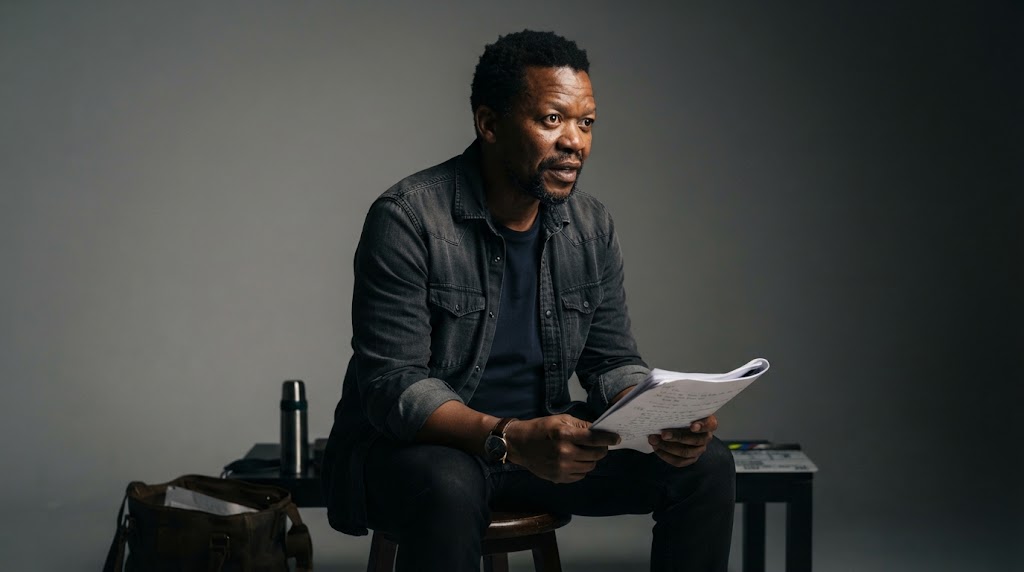
An Actor salary in South Africa usually ranges from about R10,000 to R45,000+ per month for working actors, but earnings can vary widely because many actors are freelancers and are paid per day, per episode, per production, per commercial, per voice-over job or per theatre contract rather than receiving a fixed monthly salary. Established TV, film, commercial and voice-over actors can earn more, while extras and early-career actors may earn much less.
Actors perform in television, film, theatre, commercials, radio, voice-over, corporate videos, online content and live events. Unlike many traditional careers, acting income is often irregular. A strong month with a commercial, TV role or voice-over campaign may be followed by quieter months with little or no paid work.
Key takeaways
- Entry-level Actors may earn around R5,000 to R12,000 per month, depending on work availability.
- Working Actors often earn between R10,000 and R30,000 per month.
- Established Actors may earn R30,000 to R60,000+ per month during active contracts.
- WageIndicator places Actors in South Africa in a 2026 range of about R10,910 to R44,835 per month.
- Indeed reports an average Actor salary of about R26,597 per month, but this is based on a very small salary sample.
- PayScale lists Actor / Actress salary data around R175,500 per year as a broad median benchmark, with entry-level total compensation reported higher in some samples.
- Commercials, voice-over, recurring TV roles, presenting, influencer work and international productions can improve earning potential.
Actor salary range in South Africa
| Experience level / role type | Estimated monthly salary |
|---|---|
| Background Actor / Extra | R250 – R700+ per call |
| Entry-level Actor | R5,000 – R12,000 |
| Working Actor | R10,000 – R30,000 |
| Established TV / film Actor | R30,000 – R60,000+ |
| Commercial / voice-over Actor | Highly variable per campaign |
| Lead Actor / celebrity performer | R60,000+ in strong months |
| Full-time performer benchmark | R10,910 – R44,835 |
Salary sources vary because acting work is often paid differently from normal employment. Roles may be listed as Actor, Actress, Performer, Presenter, Voice Artist, Theatre Actor, TV Actor, Film Actor, Background Actor, Extra, Commercial Actor, Supporting Actor, Lead Actor, Stunt Performer or Character Performer.
WageIndicator places Actors in South Africa in a 2026 salary range of about R10,910 to R44,835 per month. Indeed reports an average Actor salary of about R26,597 per month, based on salary data updated in August 2026, but the sample is very small and should be treated carefully. PayScale lists broad Actor / Actress salary data in South Africa, with a median benchmark around R175,500 per year, or about R14,625 per month, while its hourly actor benchmark is about R122 per hour.
What does an Actor do?
An Actor performs a character, script or role for an audience or camera.
Typical duties include:
- Auditioning for roles
- Reading and interpreting scripts
- Learning lines
- Rehearsing scenes
- Performing on camera or stage
- Taking direction from directors
- Working with other actors and crew
- Attending wardrobe, makeup and technical calls
- Recording voice-over or radio work
- Performing in commercials or corporate videos
- Maintaining continuity across scenes
- Developing character choices
- Promoting productions where required
- Working with agents, casting directors and producers
- Managing freelance schedules and contracts
Actors need strong performance skills, emotional range, discipline, reliability and resilience. Much of the career involves auditioning, waiting, networking and handling rejection.
What affects an Actor salary?
Type of work
TV, film, theatre, commercials, voice-over, presenting, corporate videos and online content all pay differently. Commercials and voice-over work can pay well, especially where usage rights are included.
Role size
A lead actor usually earns more than a supporting actor, day player, background actor or extra. Speaking roles usually pay more than non-speaking roles.
Experience and reputation
Recognisable actors, award-winning actors and performers with strong credits can negotiate better fees. New actors may accept lower-paid work to build experience and showreels.
Agent representation
Agents can help actors access better auditions, negotiate fees and manage contracts. Agent commissions reduce take-home pay, but good representation can improve overall earning potential.
Usage and repeat fees
Commercials and broadcast work may include usage terms. A fee for one day of shooting is different from a fee that includes months of TV, online, radio or billboard usage. Actors should understand what rights they are selling.
Freelance work pattern
Actors often do not earn the same amount every month. Annual income can be more useful than monthly salary because jobs may come in bursts.
Entry-level Actor salary
An entry-level Actor may earn around R5,000 to R12,000 per month, although some new actors earn less if they only book occasional work.
At this level, the person may work as an extra, student-film actor, theatre performer, corporate-video actor, children’s entertainer, promotional performer or small-role actor while building experience.
Background Actor or Extra salary
A Background Actor or Extra may earn around R250 to R700+ per call, depending on production, location, hours, agency and role type.
Extras usually appear in the background of scenes and often do not have speaking lines. Pay is much lower than for principal actors, but extra work can help beginners understand a professional set.
Working Actor salary
A working Actor may earn between R10,000 and R30,000 per month, averaged across active periods.
This level usually applies to someone who books occasional TV, theatre, commercial, voice-over or corporate work but may still need other income streams between acting jobs.
Established Actor salary
An established Actor may earn R30,000 to R60,000+ per month during active contracts.
Higher earnings are more likely where the actor has regular TV work, recurring soapie or drama roles, strong commercial bookings, presenting work, voice-over clients or a recognised public profile.
TV Actor salary
A TV Actor may earn widely different amounts depending on whether they are an extra, day player, supporting cast member, recurring actor or lead.
Older South African TV industry reporting suggested that main actors in local soapies could earn around R25,000 to R60,000 per month, while extras might earn around R250 to R500 per call. Although those figures are older, they remain useful for understanding how sharply pay can differ between background work and recurring principal roles.
Commercial Actor salary
A Commercial Actor may earn a once-off session fee plus usage fees, depending on the contract.
Commercial work can be one of the better-paying acting categories, especially for national campaigns, banking, retail, telecoms, alcohol-free FMCG, insurance, automotive or international brands. However, commercial work is unpredictable and may include restrictions that prevent an actor from appearing in competitor adverts.
Voice-over Actor salary
A Voice-over Actor may be paid per recording session, script, usage period, campaign or channel.
Voice-over work can include radio adverts, TV commercials, online videos, explainer videos, e-learning, animation, dubbing, narration, IVR messages, audiobooks and corporate content. Experienced voice artists with home studio setups and agency relationships may earn more consistently.
Theatre Actor salary
A Theatre Actor may be paid weekly, monthly for a season, per performance or through project-based contracts.
Theatre pay is often lower than TV and commercial work, but it can help actors build craft, credibility, network connections and performance stamina. Rehearsal pay may differ from performance pay depending on the production budget.
Actor vs Presenter salary
An Actor performs characters or scripted roles.
A Presenter usually appears as themselves or as a host, introducing content, interviewing guests, guiding audiences or representing a brand. Presenters with strong screen presence, audience trust and social media reach may earn well, especially in TV, online video and corporate work.
Actor vs Model salary
Actors are paid to perform, interpret scripts and portray characters.
Models are paid to appear in stills, fashion shoots, campaigns, catalogues or promotional content. The industries overlap in commercials and advertising, but acting usually requires performance, dialogue and emotional expression, while modelling is more image and brand focused.
How to earn more as an Actor
To increase earning potential, actors need to build craft, visibility and commercial value.
Useful areas include:
- Acting training
- Screen acting
- Voice training
- Audition technique
- Improvisation
- Movement and physical performance
- Theatre experience
- Showreel development
- Professional headshots
- Voice-over demo reel
- Accent and language skills
- Agent representation
- Networking with casting directors
- Social media presence
- Contract and usage-fee awareness
The strongest actors are not only talented. They are reliable, prepared, professional on set and able to treat acting like a business.
FAQ: Actor salary
What is the average Actor salary in South Africa?
Indeed reports an average Actor salary of about R26,597 per month, but this is based on a small sample. WageIndicator places Actors in South Africa in a 2026 range of about R10,910 to R44,835 per month. A practical Actor salary range is about R10,000 to R45,000+ per month for working actors, with high variation.
Do actors in South Africa earn a fixed salary?
Not usually. Many actors are freelancers and are paid per job, episode, call, shoot day, theatre run, voice-over session or commercial campaign. Some recurring TV roles may feel more like monthly income during a contract period.
How much do extras get paid in South Africa?
Extras may earn around R250 to R700+ per call, depending on production, agency, hours and role type. Background work usually pays much less than speaking roles.
Do TV actors earn more than theatre actors?
Often, yes. TV and commercial work can pay more than theatre, especially for recurring roles and national campaigns. However, theatre can be important for training, credibility and long-term craft.
Is acting a good career in South Africa?
Acting can be a good career for someone with talent, discipline, resilience and a realistic view of freelance income. Many actors combine acting with voice-over, presenting, teaching, content creation, writing, directing or other creative work.
What jobs can an Actor move into?
An Actor can move into roles such as Voice-over Artist, Presenter, Acting Coach, Drama Teacher, Casting Assistant, Director, Scriptwriter, Producer, Content Creator, Theatre Practitioner, Corporate Facilitator or Entertainment Host.
Sources
- WageIndicator Actors salary data https://wageindicator.org/en-za/work-in-south-africa/role-and-pay/south-africa-actors
- Indeed Actor salary data https://za.indeed.com/career/actor/salaries
- Indeed Performer salary data https://za.indeed.com/career/performer/salaries
- PayScale Actor / Actress salary data https://www.payscale.com/research/ZA/Job%3DActor_%2F_Actress/Salary
- PayScale Actor / Actress hourly rate data https://www.payscale.com/research/ZA/All_Actors_%2F_Actresses/Hourly_Rate
- PayScale Actor / Actress salary index https://www.payscale.com/research/ZA/All_Actors_%2F_Actresses/Salary
- WageIndicator Fashion and Other Models salary data https://wageindicator.org/en-za/work-in-south-africa/role-and-pay/south-africa-fashion-and-other-models
- WageIndicator Other Artistic and Cultural Associate Professionals salary data https://wageindicator.org/en-za/work-in-south-africa/role-and-pay/artistic-and-cultural-associate-professionals-all-other
- MyBroadband TV actor pay article https://mybroadband.co.za/news/broadcasting/142088-how-much-tv-actors-in-south-africa-get-paid.html
- City of Cape Town Artist’s Handbook https://resource.capetown.gov.za/documentcentre/Documents/Procedures%2C%20guidelines%20and%20regulations/The_Artists_Handbook.pdf