


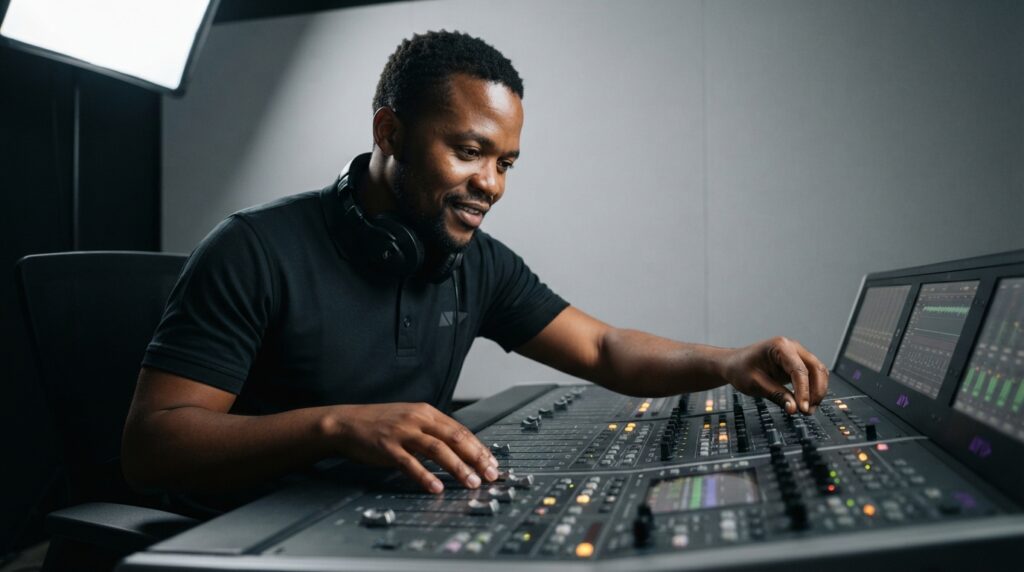
A Sound Engineer salary in South Africa usually ranges from about R8,000 to R35,000 per month, depending on experience, employer, location, technical skill, project type and whether the role is in live events, studio recording, broadcast, theatre, film, post-production, church production, corporate AV, music venues or freelance audio work. Senior Sound Engineers, broadcast audio specialists and experienced live-event engineers can earn more.
Sound Engineers manage the technical side of audio. Their work can include recording, mixing, live sound, microphones, speakers, signal flow, audio editing, broadcast sound, sound checks and troubleshooting sound systems.
Key takeaways
- Entry-level Sound Engineers may earn around R8,000 to R12,000 per month.
- Experienced Sound Engineers often earn between R12,000 and R22,000 per month.
- Senior or specialist Sound Engineers may earn R22,000 to R35,000+ per month.
- Freelance sound engineers may earn per gig, day, project or event rather than a fixed monthly salary.
- Live sound, broadcast, post-production, Pro Tools, mixing, RF, system tuning and event experience can improve earning potential.
Sound Engineer salary range in South Africa
| Experience level / role type | Estimated monthly salary |
|---|---|
| Entry-level Sound Engineer | R8,000 – R12,000 |
| Experienced Sound Engineer | R12,000 – R22,000 |
| Senior / Specialist Sound Engineer | R22,000 – R35,000+ |
| Freelance Sound Engineer | Varies by gig, day rate and project |
| Wider market range | R5,295 – R30,418+ |
Salary sources vary because some roles are listed as Sound Engineer, Audio Engineer, Sound Technician, Live Sound Engineer, Studio Engineer, Recording Engineer, Mixing Engineer, Broadcast Audio Engineer, AV Technician, Theatre Sound Technician or Audio Visual Technician.
Indeed reports an average Sound Engineer salary of about R5,295 per month in South Africa, but this is based on a very small sample and may understate full-time or specialist roles. Paylab places Sound Engineers in South Africa in a gross monthly range of about R16,940 to R30,418. Indeed employer-specific data for The Make it Good Company shows Sound Engineer pay at about R22,362 per month, while broader journalism, printing, arts and media benchmarks from Paylab show audio and media roles can vary widely by employer and responsibility.
What does a Sound Engineer do?
A Sound Engineer captures, balances, edits or amplifies sound for live or recorded productions.
Typical duties include:
- Setting up microphones, speakers and mixing desks
- Running sound checks
- Mixing live sound for events or performances
- Recording vocals, instruments, dialogue or sound effects
- Editing and cleaning audio
- Mixing tracks or audio stems
- Monitoring audio levels
- Troubleshooting feedback, noise or signal issues
- Managing cables, patching and signal flow
- Working with artists, producers, presenters or event teams
- Supporting broadcasts, livestreams or theatre productions
- Maintaining audio equipment
- Preparing audio files for delivery
Sound engineering work can be highly practical and technical. It often involves long hours, late nights, travel, tight deadlines and fast problem-solving under pressure.
What affects a Sound Engineer salary?
Work setting
Sound Engineers in live events, broadcast, post-production, theatre, houses of worship, corporate AV, radio, film, music studios or touring environments can earn different salaries. Broadcast, corporate AV and high-end live production may offer more stable earning potential than small music venues or low-budget studio work.
Freelance vs permanent employment
Freelance Sound Engineers may earn per gig, day or project. This can produce higher income in busy months, but income may be inconsistent. Permanent roles may pay less per event but offer more stability.
Technical skill
Strong knowledge of signal flow, gain staging, live mixing, DAWs, RF systems, digital consoles, Dante, system tuning, stage patching and post-production tools can improve salary prospects.
Experience and reputation
Sound Engineers often build careers through reputation. Reliable engineers who are calm under pressure, easy to work with and technically strong are more likely to get repeat bookings and higher-paying gigs.
Equipment and transport
Freelancers who own microphones, interfaces, mixers, speakers, cables or mobile recording gear may charge more, but they also carry equipment, maintenance, insurance and transport costs.
Entry-level Sound Engineer salary
An entry-level Sound Engineer may earn around R8,000 to R12,000 per month.
At this level, the person may assist with setup, cabling, microphone placement, stage patching, basic recording, equipment loading, sound checks and simple mixes under supervision.
Experienced Sound Engineer salary
An experienced Sound Engineer may earn between R12,000 and R22,000 per month.
This level usually applies to someone who can run smaller events, studio sessions, church services, corporate AV setups, podcast recordings or live mixes independently.
Senior Sound Engineer salary
A Senior Sound Engineer may earn R22,000 to R35,000+ per month.
Higher salaries are more likely where the role includes live-event leadership, broadcast sound, complex mixing, system design, post-production, theatre production, touring, team supervision or technical direction.
Sound Engineer vs Sound Technician salary
A Sound Technician often focuses on setting up, operating and maintaining audio equipment.
A Sound Engineer may have broader responsibility for the sound result, including mixing, recording, balancing audio, solving acoustic problems and working creatively with producers, performers or directors. In job adverts, the titles often overlap.
Sound Engineer vs Music Producer salary
A Sound Engineer focuses on the technical capture and quality of audio.
A Music Producer usually has a more creative and strategic role, shaping the song, arrangement, performance, sound direction and final product. Some people do both, especially in smaller studios.
How to earn more as a Sound Engineer
To increase earning potential, build specialist technical skills and a reliable project track record.
Useful areas include:
- Live sound mixing
- Digital mixing consoles
- Pro Tools, Logic Pro or Ableton
- Broadcast audio
- Podcast and voice recording
- Post-production
- Sound design
- RF and wireless microphone systems
- Dante and networked audio
- System tuning
- Stage management
- Corporate AV
- Theatre sound
- Equipment maintenance
The strongest Sound Engineers are technically sharp, calm under pressure and able to make audio sound clear in difficult real-world conditions.
FAQ: Sound Engineer salary
What is the average Sound Engineer salary in South Africa?
Sound Engineer salary data varies because many roles are freelance or project-based. A practical salary range is about R8,000 to R35,000 per month, while Paylab places Sound Engineers in a range of about R16,940 to R30,418 per month.
Is sound engineering a good career?
Yes, but it can be competitive and inconsistent, especially in music and live events. It can be a good career for someone who enjoys audio, technology, music, events, problem-solving and hands-on production work.
Do Sound Engineers earn more freelance or full-time?
Freelancers can earn more in busy months, especially with strong clients and repeat bookings, but income can be irregular. Full-time roles may offer more stability, especially in broadcast, corporate AV, churches, theatres or production companies.
What qualifications do Sound Engineers need?
Employers may look for a qualification in sound engineering, music technology, audio production, broadcast technology or live production. Practical experience and a strong portfolio are often just as important.
What jobs can a Sound Engineer move into?
A Sound Engineer can move into roles such as Senior Sound Engineer, Audio Engineer, Broadcast Audio Engineer, Recording Engineer, Mixing Engineer, Sound Designer, AV Technician, Technical Director, Music Producer or Production Manager.
Sources
Indeed Sound Engineer salary data
https://za.indeed.com/career/sound-engineer/salaries
Indeed Cape Town Sound Engineer salary data
https://za.indeed.com/career/sound-engineer/salaries/Cape-Town–Western-Cape
Indeed Audio Engineer salary data
https://za.indeed.com/career/audio-engineer/salaries
Indeed Sound Technician salary data
https://za.indeed.com/career/sound-technician/salaries
Indeed The Make it Good Company Sound Engineer salary data
https://za.indeed.com/cmp/The-Make-IT-Good-Company/salaries/Sound-Engineer
Paylab Sound Engineer salary data
https://www.paylab.com/za/salaryinfo/journalism-printing-arts-media/sound-engineer
Paylab Journalism, Printing, Arts and Media salary data
https://www.paylab.com/za/salaryinfo/journalism-printing-arts-media?global_currency=ZAR