


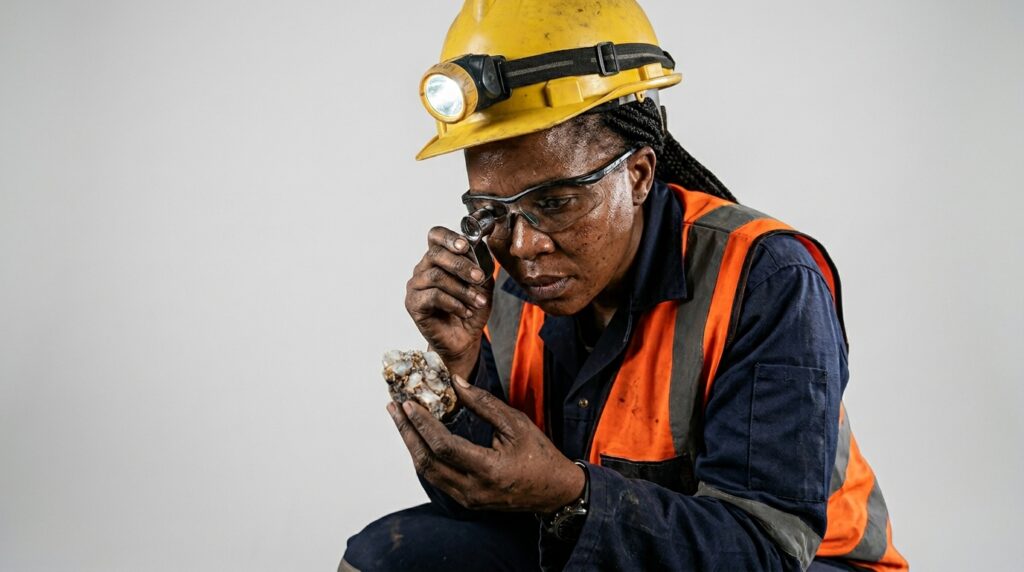
Geologist salaries in South Africa can vary widely depending on experience, commodity exposure, fieldwork demands, location and whether the role sits in mining, exploration, environmental consulting or engineering geology. In practice, many geologist roles fall into a broad range from around R300,000 to R800,000 per year, whilst senior and specialist mining roles can move well above that.
If you are researching a geologist salary, it helps to separate entry-level, mid-career and senior roles. Salary data sources in South Africa show quite a broad spread, which usually reflects differences in seniority, bonuses, and whether the post is in private mining, consulting, or public-sector geoscience work.
Geologist salary ranges in South Africa
Based on recent South African salary benchmarks and job market data, geologists may typically earn in the following ranges:
- Entry-level geologist – R300,000 to R500,000 per year
- Mid-level geologist – R480,000 to R700,000 per year
- Senior geologist – R800,000 to R1,000,000+ per year
- Specialist mining or resource geology roles – can exceed R1.2 million per year in some cases
Monthly, that works out roughly as follows:
- Entry-level – about R25,000 to R41,500 per month
- Mid-level – about R40,000 to R58,000 per month
- Senior – about R66,000 to R83,000+ per month
What is the average geologist salary?
Average figures differ quite a lot between platforms. Some South African datasets place the average geologist salary at roughly R310,000 a year, whilst others place it closer to R480,000 to R668,000 a year. That gap usually comes from differences in sample size, whether bonuses are included, and whether the data leans more toward junior, consulting or mining-sector roles.
A practical way to read the market is this:
- Junior and early-career geologists often sit below the national average headline figures.
- Established geologists in mining and exploration can move into the upper mid-range fairly quickly.
- Senior geologists, resource geologists and niche specialists can earn materially more, especially where scarce skills or remote-site work are involved.
What affects a geologist salary?
Experience level
Experience is one of the biggest pay drivers. Graduate and junior geologists usually start on lower packages, but salaries tend to rise meaningfully once a geologist has several years of practical field, mine-site or modelling experience.
Sector
Geologists work across several sectors, including:
- mining and mineral exploration
- environmental and hydrogeological consulting
- engineering geology and infrastructure
- research and public-sector geoscience
Mining and resource geology roles often pay more than public-sector or academic routes, especially where production pressure, reserve estimation and operational accountability are involved.
Location
Location can materially affect pay. Data suggests geologist salaries in Johannesburg and Cape Town may sit above the national average in some cases, although many of the strongest packages are linked to site-based mining regions rather than city offices alone.
Registration and qualifications
Professional standing matters. In South Africa, natural scientists working in recognised fields are generally expected to register with SACNASP. A BSc Honours or equivalent geology-related qualification is commonly expected, and professional registration can strengthen earning potential over time.
Specialisation
Geologists with strong skills in resource modelling, mine geology, exploration targeting, geostatistics, environmental compliance, or geotechnical and hydrogeological work may command better packages than generalist candidates.
Typical geologist career progression
A geologist salary often grows alongside technical responsibility.
A common path may look like this:
- Graduate or junior geologist – supports mapping, logging, sampling and reporting
- Geologist – manages field programmes, interpretation and technical outputs
- Senior geologist – oversees projects, mentors juniors and takes accountability for decisions
- Resource geologist or principal geologist – leads estimation, compliance, planning support and strategic geology work
As responsibility rises, pay often shifts from a pure base salary to a fuller package that may include bonuses, travel allowances, site benefits or other incentives.
Do geologists earn well in South Africa?
Geology can be a strong-paying profession, especially for professionals who move into mining, resource estimation, petroleum-related work, or highly technical consulting. The field does, however, show a wide earnings spread. Someone entering the profession may earn a moderate salary at first, whilst an experienced senior geologist can earn a very competitive package.
This means geology can offer good long-term earning potential, but it is not a one-size-fits-all market.
The strongest salaries usually go to those with:
- solid field and reporting experience
- scarce technical expertise
- mine-site exposure
- strong software and modelling capability
- professional registration and a credible track record
Conclusion
A geologist salary in South Africa usually sits within a broad professional range, with many roles landing between R300,000 and R800,000 per year. Mid-career professionals commonly sit around the R480,000 to R700,000 mark, whilst senior geologists and specialist mining professionals may earn R800,000 to over R1 million a year.
If you are benchmarking pay, it is worth comparing the exact type of geology role, the province, the level of field exposure, and whether the package includes bonuses or site-based benefits.
Sources
- PayScale – Average Geologist Salary in South Africa
- SalaryExpert – Geologist Salary in South Africa
- Indeed – Geologist salary in South Africa
- Mywage South Africa – Geologists and geophysicists pay guide
- Talent.com – South Africa salary index
- SACNASP – Requirements for registration
- Gov.za – Register as a professional natural scientist