


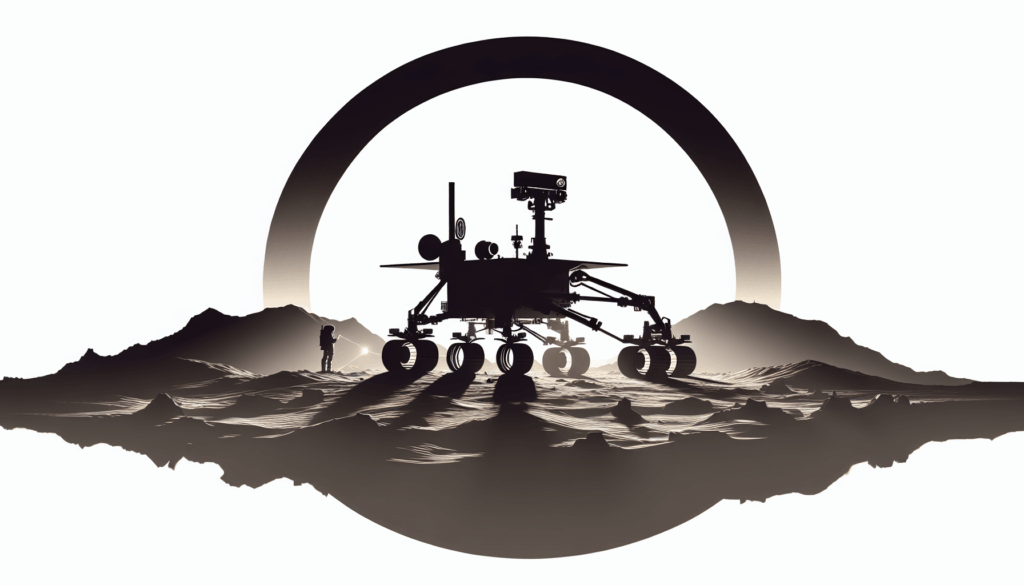
The search for life on Mars has reached an unprecedented milestone as NASA’s Perseverance rover uncovered compelling evidence of potential ancient microbial life on the Red Planet. This unprecedented discovery, announced in September 2025, marks a pivotal moment in humanity’s quest to answer the age-old question: are we alone in the universe?
The breakthrough finding
NASA’s latest Mars mission yielded extraordinary results when Perseverance identified unique biosignatures in Martian rock samples. The rover’s sophisticated instruments detected complex organic molecules and mineral patterns that strongly suggest biological activity occurred billions of years ago in Mars’ Jezero Crater.
These findings represent the most promising evidence yet in NASA’s ongoing search for life on Mars, surpassing all previous discoveries in their potential significance.
Scientific analysis and verification
The discovery underwent rigorous scientific scrutiny through multiple analytical approaches:
- Detailed chemical analysis using SHERLOC spectroscopy
- Microscopic imaging revealing distinctive biological patterns
- Cross-validation through multiple rover instruments
- Peer review by leading astrobiologists worldwide
Environmental context
The samples were collected from an ancient riverbed where conditions would have been favourable for microbial life. This location was specifically chosen based on NASA’s extensive Mars research suggesting that liquid water once flowed freely on the planet’s surface.
Implications for future Mars exploration
This breakthrough has significant implications for NASA’s future Mars missions and the broader search for extraterrestrial life. Scientists are now developing new protocols for sample return missions and expanding their search parameters based on these findings.
Next steps in the investigation
NASA’s research teams are planning follow-up studies to further validate these extraordinary findings.
The next phase includes:
- Additional sample collection from surrounding areas
- Advanced laboratory analysis of returned samples
- Development of new detection methods
- International collaboration for verification
Conclusion
While NASA’s discovery of potential life on Mars represents a watershed moment in space exploration, scientists maintain a measured approach, emphasising the need for continued research and verification. This finding brings us closer than ever to answering fundamental questions about life beyond Earth.