


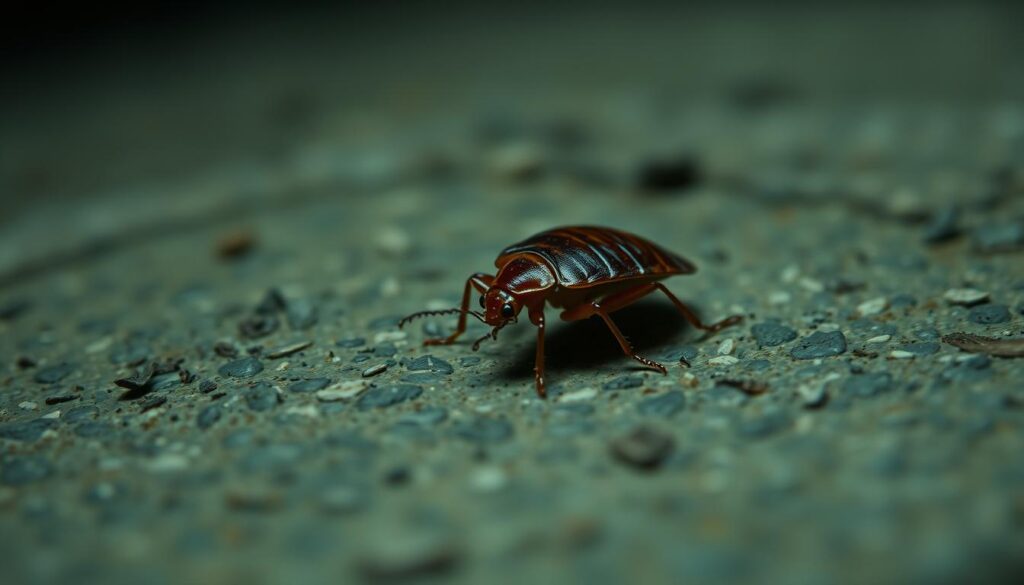
Bed bugs are small, wingless insects, about the size of an apple seed. They are often seen as a nuisance because they can infest homes and businesses. Despite not being able to fly or jump, bed bugs are great crawlers and hitchhikers. Many people wonder, “How fast can bed bugs move?”
Bed bugs can crawl at about one meter per minute. This is quite slow compared to other insects. But, don’t underestimate them. They can move up to three to four feet per minute, which is as fast as an average adult sprinting. Given their small size, they can cover a lot of ground.
Bed bugs move quickly because they can attach themselves to clothing, luggage, and furniture. This makes it easy for them to travel and spread to new places. They are also drawn to the heat and carbon dioxide humans give off. This helps them find their hosts easily.
Key takeaways
- Bed bugs can travel at speeds similar to an average adult sprinting compared to their size, moving three to four feet per minute.
- Bed bugs crawl at a speed of approximately one meter per minute, allowing them to move slowly but steadily.
- Bed bugs can easily attach themselves to clothing, luggage, and furniture, facilitating rapid transportation and spread to new locations.
- Bed bugs are attracted to the heat and carbon dioxide emitted by humans, using these cues to locate their hosts.
- Their slow movement actually helps them avoid detection, as rapid movement might alert their prey.
Understanding Bed Bug Movement
Bed bugs are small but can move quickly. They can crawl at 3 to 4 feet per minute. This speed is like an adult sprinting, considering their size. Their fast movement makes it hard to find and stop them.
How Fast Can Bed Bugs Travel?
Bed bugs are not the fastest pests, but they move impressively. Adult bed bugs are slower than younger ones. Those that have eaten recently also move slower. Cockroaches, on the other hand, are faster and more agile.
Factors Influencing Bed Bug Speed
- Temperature – Bed bugs move slower in cooler temperatures.
- Surface Texture – They can climb most surfaces but struggle with smooth ones like glass or metal.
- Food Availability – Hungry bed bugs move faster to find food, while full ones are less active.
Bed bugs can quickly move through small openings. This helps them spread between rooms and buildings easily. Their fast movement and quick breeding make infestations hard to control.
| Statistic | Value |
|---|---|
| Bed bug crawling speed | 3 to 4 feet per minute |
| Bed bug egg hatch success rate | Approximately 97% under optimal conditions |
| Bed bug population doubling time | Every 16 days in suitable conditions |
| Lifespan of a well-fed adult bed bug | 99 to 300 days in a laboratory setting |
Bed bugs’ speed, agility, and breeding make early detection key. Getting professional help is often necessary to manage bed bug problems. This ensures a bed bug-free environment.
Bed Bug Behavior and Activity Levels

Bed bugs are sneaky and never give up. They move fast and are mostly active at night. This is when humans are sleeping. They use the carbon dioxide we breathe out to find and feed on us.
When Are Bed Bugs Most Active?
Bed bugs love the night, especially between 2 am and 5 am. They can travel up to 6 meters or more to find a host. This helps them spread quickly and start new infestations.
Signs of Bed Bug Presence
- Small blood stains on bedding or mattresses
- Dark fecal spots, often found in crevices and seams
- Molted skins, which bed bugs shed as they grow
- White, sticky eggs or eggshells, indicating an active infestation
Impact of Environment on Bed Bug Activity
The environment affects how fast and far bed bugs move. Warmer temperatures and food (like sleeping humans) make them reproduce faster and move more. But, cooler places or no food make them slow down and wait.
Knowing how bed bugs behave and what affects them is key to stopping them. By watching for signs and taking action, you can keep your home bed bug-free. This protects your family from these pests.
Strategies for Controlling Bed Bug Infestations
Stopping bed bug infestation is key. Check your luggage, furniture, and bedding often, especially after traveling. Washing and drying items on high heat can kill bed bugs and their eggs. Steamers or heaters on mattresses and upholstery also work well.
For big infestations, EPA-registered insecticides might be needed. Keep sleeping in the same spot during treatment to stop the bugs from spreading. Mattress and box spring covers can also keep bed bugs out.
Effective Treatment Methods
Combining treatment methods often works best for bed bugs. Here are some good bed bug infestation control ways:
- Wash and dry infested items on the highest heat setting to kill bed bugs and their eggs.
- Use steam cleaners or heaters to treat mattresses, box springs, and upholstered furniture.
- Apply EPA-registered insecticides according to the label instructions.
- Use plant-based products, such as EcoRaider or Bed Bug Patrol, which have shown effectiveness against bed bugs.
Professional Pest Control Options
For really tough cases, professional pest control services might be needed. These companies use special chemicals and heat treatments. They might need to visit multiple times to get rid of all the bed bugs.
“Bedbug infestations can take weeks to months to treat on your own. Multiple treatment phases, including chemical and non-chemical treatments, are typically required to eliminate bedbug infestations.”
To avoid getting bed bugs again, keep things clean, use bed bug covers, seal cracks, vacuum and wash often, and be careful when traveling. A good bed bug prevention and control plan can make your home pest-free again.
Moving Forward: Staying Bed Bug-Free
Keeping your home bed bug-free is a constant fight. But with careful effort and the right steps, you can win this battle. Regular checks are key to catching bed bugs early. They spread fast in messy places.
Importance of Regular Inspections
Check your home often, especially where bed bugs hide. Look at mattresses, box springs, and furniture crevices. This way, you can spot problems early and act fast.
DIY Solutions for Bed Bug Management
For small issues, you can try DIY solutions. Use bed bug traps, sprinkle diatomaceous earth, and spray special sprays. Keeping your space tidy helps you find and fix bed bug problems.
When to Seek Professional Help
If DIY doesn’t work or the problem gets worse, get help from pest control pros. They have the tools and knowledge to get rid of bed bugs for good. Calling them early saves you time, money, and stress.
FAQ: Do Bed Bugs Move Fast?
How fast can bed bugs move?
Bed bugs move slowly, about 1 meter per minute. This is as fast as an adult sprinting, considering their size.
What factors influence bed bug speed?
Several things affect bed bug speed. Temperature, surface texture, and food availability play a role. Warmer temperatures and right surfaces help them move faster. But, smooth surfaces like glass or metal can slow them down.
When are bed bugs most active?
Bed bugs are most active at night. They move more when humans are asleep. This is because they sense the carbon dioxide we breathe out.
What are the signs of bed bug presence?
Look for small blood stains, dark fecal spots, molted skins, and white sticky eggs. These are signs bed bugs are around.
How does the environment impact bed bug activity?
The environment greatly affects bed bugs. Warm temperatures and food sources help them reproduce and move faster.
How can I prevent bed bug infestations?
To prevent bed bugs, check luggage, furniture, and bedding after traveling. Treat items by washing in high heat, using steamers or heaters, and applying EPA-registered insecticides.
When should I seek professional help for bed bug control?
If DIY methods don’t work, get professional help quickly. Experts have tools and treatments that can effectively target bed bugs.
Source Links
- https://callbama.com/how-quickly-do-bed-bugs-spread/
- https://todayshomeowner.com/pest-control/guides/can-bed-bugs-fly-or-jump/
- https://www.forbes.com/sites/brittanyanas/2023/10/21/why-it-can-be-so-difficult-to-identify-bed-bugs-according-to-pest-experts/
- https://bigbugs.com/are-bed-bugs-fast-everything-you-need-to-know/
- https://www.vdacs.virginia.gov/pdf/bb-biology1.pdf
- https://www.ncbi.nlm.nih.gov/pmc/articles/PMC4553421/
- https://u.osu.edu/bedbugs/research-refs/bed-bug-dispersal/
- https://cisr.ucr.edu/invasive-species/bed-bugs
- https://www.healthline.com/health/healthy-home-guide/how-to-get-rid-of-bed-bugs
- https://www.nmhealth.org/publication/view/help/246/
- https://bedbugbbq.com/do-bed-bugs-move-around-during-the-day/
- https://ask.metafilter.com/341927/Should-I-help-a-friend-move-who-has-had-bedbugs-recently