


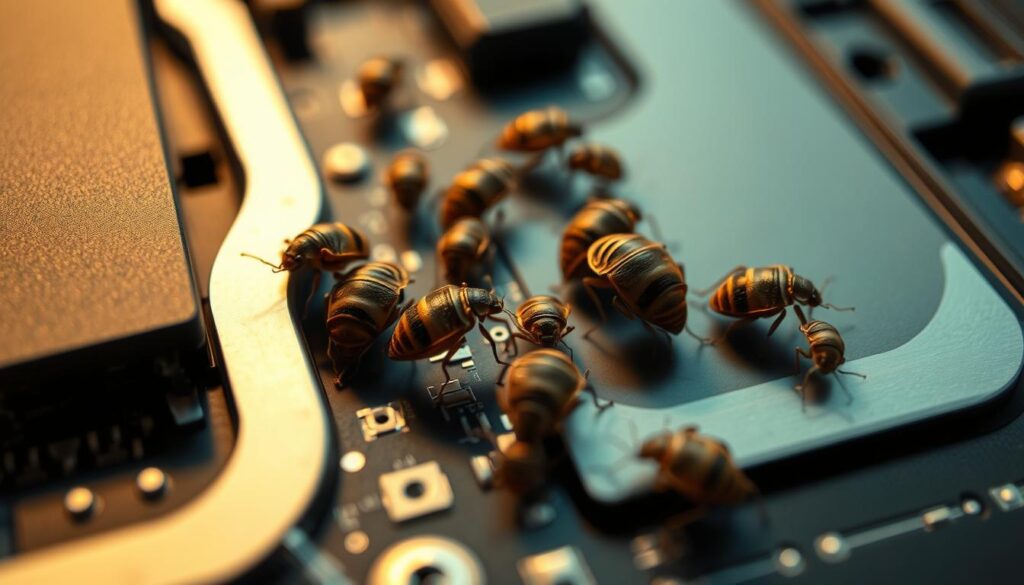
Bed bugs are tiny, resilient pests that can sneak into many places in your home or office. They can hide in sofas, beds, dressers, and even electronic devices. Although they are not naturally attracted to electronics, they might hide in them during a big infestation.
In a severe bed bug problem, these pests might hide in laptops, alarm clocks, cell phones, and other gadgets. But, electronics are not their favorite place. Bed bugs usually prefer areas close to humans, their main food source.
Key takeaways
- Bed bugs can hide in electronics, but they are not naturally drawn to them due to the lack of feeding opportunities and low heat emission.
- During a severe infestation, bed bugs may seek refuge in electronic devices like laptops, alarm clocks, and cell phones.
- Prevention is crucial to protect your electronics from potential bed bug infestations by keeping them away from areas prone to bed bug activity.
- Conventional treatment methods like insecticide sprays may damage sensitive electronic components, so alternative options should be considered.
- Seeking professional assistance is recommended for effectively dealing with bed bug infestations in personal belongings, including electronic devices.
Understanding Bed Bugs and Their Habits

Bed bugs are small, parasitic insects that feed on human blood. They thrive in warm places near their food, like mattresses and furniture. Knowing where they hide is key to stopping and preventing infestations.
What Are Bed Bugs?
Adult bed bugs are about 1/4″ long and are red-brown. They live all over the world, often in hotels and homes. They can spread through infested items or second-hand furniture.
How Do They Thrive in Your Home?
Bed bugs are most active at night, drawn to human heat and carbon dioxide. They can travel far to find new hosts. Their life cycle includes egg, nymph, and adult stages, lasting weeks to months.
Common Places Where Bed Bugs Hide
- Cracks and crevices in walls, floors, and furniture
- Mattress seams, box springs, and bed frames
- Baseboards, crown molding, and other tight spaces
- Upholstered furniture, such as sofas and chairs
- Electrical outlets and electronics
Regularly check furniture, luggage, and electronics for bed bugs. Being alert and proactive can help prevent infestations.
Can Bed Bugs Live in Electronics?
Bed bugs can indeed make their homes in various electronic devices. They pose a potential threat to your tech-savvy lifestyle. These pests may not be drawn to the device itself. But they can seek refuge in the dark, compact spaces found in laptops, alarm clocks, cell phones, TVs, and gaming consoles.
They especially do this if these items are left near infested furniture.
Electronics That May Be Affected
Bed bugs are known to hide in a wide range of electronic devices, including:
- Laptops and computers
- Alarm clocks and radios
- Cell phones and smartphones
- Television sets
- Gaming consoles and controllers
How Long Can Bed Bugs Survive in Devices?
Bed bugs are resilient pests, capable of surviving for extended periods without feeding. They don’t necessarily thrive in electronic devices. But they can remain dormant and hidden within these environments for up to a year if left undisturbed.
Factors like temperature, humidity, and access to food sources can influence the duration of their survival.
Signs of Infestation in Electronics
If you suspect your electronic devices may be harboring bed bugs, look for the following telltale signs:
- Unexplained bites or skin irritation after using the device
- Dark spots or droppings near vents, ports, or other small openings
- In severe cases, the presence of live bed bugs within the device
If you discover any of these indicators, it’s crucial to take immediate action. This is to prevent further can bed bugs survive in electronic gadgets and how to treat electronics for bed bugs. Seeking professional help is often the best course of action. This ensures a complete and effective treatment of your electronics and home.
“Bed bugs can be a persistent and pervasive problem, but with the right approach, you can protect your electronics and your home from their unwanted presence.”
Preventing Bed Bugs from Infesting Your Electronics
Keeping your electronic devices bed bug-free is key to a pest-free home. Make sure to keep them away from beds and upholstered furniture. Also, clean and dust your gadgets regularly, focusing on ports, vents, and crevices.
Tips for Protecting Your Gadgets
Don’t use your devices on beds or upholstered furniture. Bed bugs love these spots. If you think you have bed bugs, use bed bug chemical strips (Nuvan Strips) in sealed bags. This method can help control bed bugs without harming your devices.
Best Practices for Cleaning and Maintenance
Clean and dust your devices often to keep bed bugs away. Focus on ports, vents, and crevices. Use a vacuum with a crevice tool to clean hard spots well.
When to Seek Professional Help
If you think you have a big bed bug problem, get help from experts like ThermoPest. They know how to treat bed bugs in electronics safely. They offer heat treatments or cryonite freezing to get rid of bed bugs without damaging your devices.
FAQ: Can Bed Bugs Live In Electronics?
Can bed bugs live in electronics?
Yes, bed bugs can live in electronics, but it’s not their first choice. Devices like laptops, alarm clocks, and TVs can be at risk. They might hide in electronics left near infested furniture.
What signs indicate a bed bug infestation in electronics?
Signs include unexplained bites and dark spots near vents. In severe cases, you might see live bugs. Bed bugs don’t eat electronics, but they can live in them for a while if not disturbed.
How long can bed bugs survive in electronic devices?
Bed bugs can survive in electronics for a long time. This depends on the temperature, humidity, and if they find food. If left alone, they can stay for a while.
How can I protect my electronics from bed bug infestations?
Keep devices away from infested areas and don’t use them on beds. Clean and dust electronics regularly, especially around ports and vents. For infested devices, use bed bug chemical strips in sealed bags. Always follow safety guidelines. Professional heat treatments can also get rid of bed bugs without harming your electronics.
When should I seek professional help for bed bugs in electronics?
If you think you have a bad infestation, get help from pest control experts. They know how to treat bed bugs in all hiding spots, including electronics. They can help get rid of bed bugs and stop them from coming back.
Source Links
- https://longislandbedbuginspections.com/bed-bugs-and-electronics-how-to-protect-and-clean-your-devices/
- https://pest.co.uk/2024/09/23/can-bed-bugs-live-in-electronics-heres-what-you-need-to-know/
- https://extension.entm.purdue.edu/bedbugs/knowTheFacts.php
- https://www.pinestatepest.com/understanding-bed-bug-habits-and-life-cycle
- https://www.venablespestmanagement.com/blog/2023/june/beyond-beds-surprising-hiding-places-for-bed-bug/
- https://www.cryonite.com/news/bed-bugs-in-electronics/
- https://pestagent.ca/bedbug/do-they-get-into-electronics
- https://groups.google.com/g/sci.electronics.repair/c/_EtDmf5Me_8