


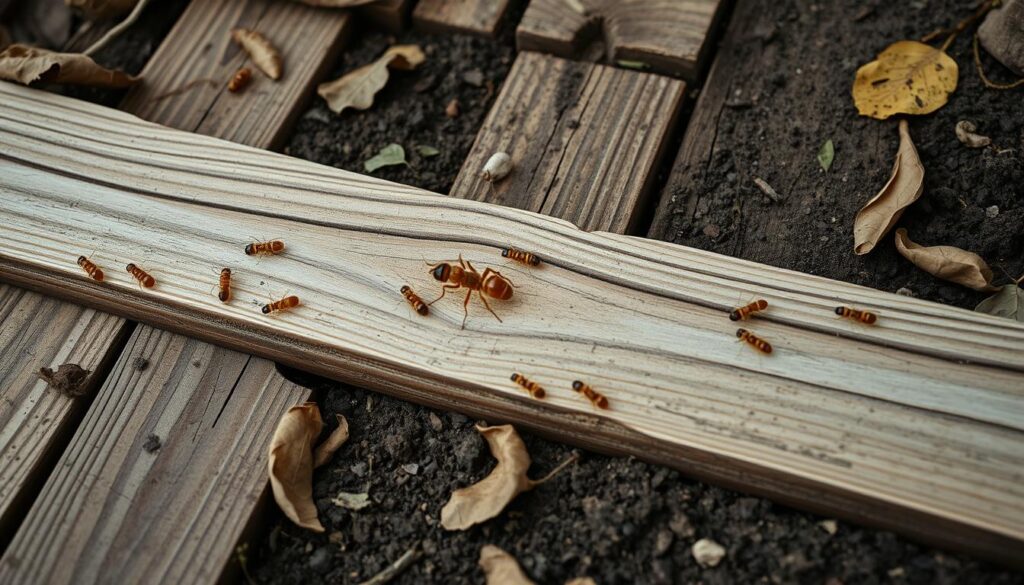
Keeping your home safe from termites is very important. Termite-proofing your wood helps keep your home strong. With a few key tips, you can protect your wood from these pests.
Start by checking your home’s foundation often. Do this in the spring and fall when termites are most active. Look for mud tubes, which mean termites are around. Use a flashlight to check crawlspaces and basements for damage or termites.
It’s also key to keep your home well-ventilated and sealed. Termites love moisture, so controlling dampness helps keep them away. Keep wood piles far from your house and trim trees or shrubs that termites might use to get in.
Key takeaways
- Inspect your home’s foundation regularly for signs of termite activity, such as mud tubes.
- Maintain proper ventilation and seal any cracks or gaps to control moisture and deter termites.
- Keep wood piles at least 20 feet away from your house and trim surrounding vegetation to prevent easy access for termites.
- Consider using pressure-treated wood for outdoor structures and replace cardboard storage with plastic bins.
- Seek professional help from a licensed pest control specialist for comprehensive termite inspection and treatment.
Understanding Termite Behavior and Wood Vulnerability
To keep your home safe from termites, it’s key to know how they act and what wood they like. Termites often live in damp places like basements and window sills. They sneak in through gaps in buildings. Knowing the signs of termites and where they like to be helps you use termite resistant wood techniques and termite control for wooden structures.
Common Signs of Termite Infestation
Look out for these signs of termites in your wood:
- Presence of mud tubes on walls or foundations
- Wood that sounds hollow when tapped
- Discarded termite wings near entry points
Types of Wood Most Susceptible to Termites
Not all wood attracts termites equally. Some types, like redwood and cedar, are less appealing. This is because of their natural properties.
- Redwood
- Cedar
- Juniper
Identifying High-Risk Areas in Your Property
Some areas of your property are more at risk for termites. Watch for places with:
- Standing water
- Chronically moist soil
- Crawl spaces
Creating sand barriers in crawl spaces and under certain areas can keep termites out. This helps protect your wooden structures.
“Termites can weaken wooden structures over time and pose a risk of structural collapse in severe cases.”
Knowing how termites behave and what wood they prefer is the first step to fight them. By being alert and taking action early, you can save your home or business from termite damage.
How to Termite Proof Wood – Prevention Techniques

Keeping your wood safe from termites is key to your property’s value and safety. There are many ways to protect your wooden structures. Let’s look at some important steps to termite-proof your wood:
- Create a physical barrier – Make a gap of 18 inches between soil and wood with gravel beds. This helps keep termites away from your wood.
- Apply termite-resistant treatments – Use a foam-based non-repellent termite insecticide around problem areas. Also, apply repellent termiticides on safe wood like sheds and fences to keep termites away.
- Utilize heat treatment – Heat spaces to at least 120°F for 30 minutes to kill termites. This is a safe and green way to protect your wood.
- Choose termite-resistant materials – For outdoor projects, use pressure-treated wood, which termites can’t damage. Avoid cardboard and use plastic containers instead to stop termites.
- Control moisture – Make sure air conditioning units and other sources drain well. This stops moisture from building up near your home, where termites like to be.
By using these prevention methods, you can how to termite proof wood and keep your property safe from termites. This way, you protect wood from termites effectively.
| Prevention Technique | Description |
|---|---|
| Physical Barrier | Make a gap of 18 inches between soil and wood with gravel beds for drainage and termite prevention. |
| Termite-resistant Treatments | Use foam-based non-repellent termite insecticide in trenches and apply repellent termiticides on safe wood structures. |
| Heat Treatment | Heat spaces to at least 120°F for 30 minutes to effectively kill termites. |
| Termite-resistant Materials | Choose pressure-treated wood for outdoor projects and use plastic containers instead of cardboard. |
| Moisture Control | Ensure proper drainage from air conditioning units to prevent moisture accumulation near the home. |
By using these proven prevention techniques, you can how to termite proof wood and keep your property safe from termites. This way, you protect wood from termites effectively.
Essential Treatment Methods and Protective Measures
When it comes to wood treatment against termites and termite control for wooden structures, a comprehensive approach is essential. From chemical treatments and natural barriers to professional services, a variety of options exist to safeguard your property.
Chemical Treatments and Termiticides
Liquid termiticides are a commonly used method for controlling termites, providing long-lasting protection for 8 to 12 years or more. Foam termiticide treatments can be particularly effective in addressing aerial colonies of Formosan termites. Borate treatments, applied during the construction phase, can also serve as a reliable barrier against termite infestations.
Natural Barriers and Physical Protection
Incorporating natural and physical measures can complement chemical treatments. Applying a weather sealer to all wood exposed to moisture, creating sand barriers around the structure, and maintaining proper drainage can help deter termites. Pressure-treated wood is recommended for new constructions in the garden or yard to enhance resistance against termite damage.
Professional Treatment Options
For comprehensive protection and treatment, consider enlisting the services of professional termite control experts. Whole-structure treatments, such as sulfuryl fluoride fumigation or heat treatments, can effectively eliminate infestations. Termite bait stations can also play a crucial role in deterring and eliminating termite colonies before significant damage occurs.
| Treatment Method | Effectiveness | Application |
|---|---|---|
| Liquid Termiticides | High, 8-12 years of protection | Soil application around the structure |
| Foam Termiticides | Effective for Formosan termite colonies | Application in voids and inaccessible areas |
| Borate Treatments | Reliable barrier during construction | Application on wood framing and other structural elements |
| Sulfuryl Fluoride Fumigation | Highly effective, whole-structure treatment | Encapsulation of the entire building |
| Heat Treatments | Effective, chemical-free option for drywood termites | Heating all wood to a minimum of 120°F for at least 33 minutes |
| Termite Bait Stations | Effective long-term deterrent and colony elimination | Strategically placed around the structure |
By implementing a combination of these wood treatment against termites and termite control for wooden structures methods, you can effectively safeguard your property and minimize the risk of costly termite damage.
Conclusion
Protecting your wooden structures from termites is key. Knowing how termites behave helps you keep your wood safe. Regular checks, controlling moisture, and good landscaping are vital to keep pests away.
Some woods, like oak and maple, resist termites better. But, engineered and bamboo floors also offer strong protection. Using termite-resistant plywood in high-risk spots can greatly reduce damage.
Combining prevention, treatments, and expert advice is the best way to protect your wood. This approach keeps your home or business safe from termites. By being proactive, your wooden structures will last for many years.
FAQ: How To Termite Proof Wood
How can I inspect my property for signs of termite activity?
Look for mud tubes on your foundation seasonally. Use a flashlight to check crawlspaces and basements for damage. Pay attention to moist areas like basements and window sills.
What are some effective prevention techniques to termite-proof my wood structures?
Control moisture to keep termites away. Keep wood piles far from your house. Trim trees and shrubs to block termite paths.
Use sand barriers in crawl spaces and under structures. This helps prevent subterranean termites.
What types of wood are less favorable for termites?
Redwood, cedar, and juniper are less appealing to termites.
How can I create a physical barrier to protect my wood structures?
Make a 18-inch gap between soil and wood with gravel beds. This helps with drainage and keeps termites out. Use pressure-treated wood for outdoor projects.
Choose plastic bins over cardboard for storage.
What chemical treatments can I use to protect my wood?
Apply foam-based non-repellent termite insecticide around problem areas. Use repellent termiticides on safe wood structures like sheds and decks.
When should I consider professional termite control services?
Get professional help for full protection, especially in high-risk areas or severe infestations.
Source Links
- https://www.wikihow.com/Prevent-Termites-in-Wood-Furniture
- https://www.lakenormanpest.com/top-10-ways-making-home-termite-proof/
- https://www.familyhandyman.com/list/13-must-know-tips-for-diy-termite-control/?srsltid=AfmBOoq-xYHLog0oOQdcDVnpR7G_fvdJos8vIgjCAUjVRtHn6wWfjyj7
- https://amcopest.com/news-and-updates/the-ultimate-guide-protecting-wooden-structures-from-termites
- https://polyguard.com/blog/termite-prevention
- https://www.ecopestcontrolgoldcoast.com.au/termite-behavior-preventative-measures/
- https://www.mightymitetermite.com/blog/how-to-protect-your-wood-furniture-from-termites/
- https://www.vulcantermite.com/destructive-pests/treating-wood-prevent-termites/
- https://www.licensetobuild.com/how-to-prevent-termites-in-new-construction-projects/?srsltid=AfmBOorokMmHuaLEYvrf75DXJ7FtuenZD5eiz7h29NRTAr9Lq1c_mMsj
- http://extension.msstate.edu/content/methods-termite-control
- https://ipm.ucanr.edu/PMG/PESTNOTES/pn7440.html
- https://www.familyhandyman.com/list/13-must-know-tips-for-diy-termite-control/?srsltid=AfmBOoowb_QJY80Ub0fRgzVFn5JT6rj9Rb3oLYg5qITpr5ZTqfJ5tyRs
- https://bbfloorsindia.com/blog/is-wooden-flooring-termite-proof/
- https://sylvanply.com/blog_details/termite-proof-plywood-guide