


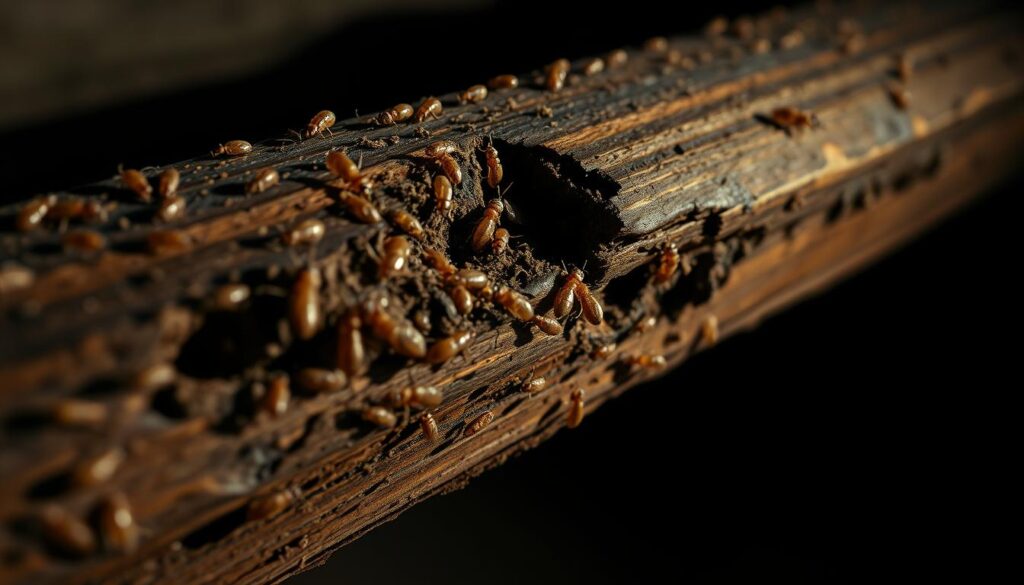
Termites are a big threat to homes because their damage is hard to spot. In many places, you need a termite check before buying a house. This is especially true if you’re getting a mortgage or certain loans.
Termite problems can cause a lot of damage and even harm your health. So, it’s key for homeowners and landlords to deal with termites fast.
Key takeaways
- Termites can cause severe damage to wooden structures in homes.
- Termite infestations may be a health code violation in certain areas.
- Landlords have legal obligations to address termite issues in rental properties.
- Early detection and treatment of termites can save homeowners from costly repairs.
- Regular inspections and preventive measures are crucial to maintain a termite-free home.
- QUICK RESOURCES: Termite Treatment Cost Calculator (All USA States), Termite Treatment Cost Calculator (New Jersey)
Understanding Termite Infestations and Health Concerns
Termites cause billions in damage each year in the US. They eat wood, cardboard, and plant material. Though they don’t eat human blood or flesh, they can still harm people’s health.
Termites and Building Damage
Termites can weaken buildings by eating wood. Subterranean termites use mud tubes to get inside. Drywood termites eat wood directly. This can cause walls and floors to collapse, making buildings unsafe.
Potential Health Risks Associated with Termite Infestations
Termite infestations can also harm people’s health. Termite frass (droppings) in the air can cause breathing problems. People with allergies or health issues may react badly.
Termites can also lead to fungal growth. This can spread infections. People with weak immune systems are at higher risk.
“Termite infestations can decrease property values due to damage and future risk.”
Termite damage and health risks show why controlling termites is key. Regular checks, treatments, and upkeep are vital. They keep buildings safe and healthy.
Are Termites A Health Code Violation

Termites are not directly linked to health code violations. They don’t pose an immediate risk to human health or food safety. This is unlike pests like rodents or cockroaches.
But, termite damage can lead to health and safety code violations. If termites weaken a building, it can cause safety issues. These issues might include problems with indoor air quality or structural stability.
In many places, landlords must deal with termite problems in rental properties. This is to keep the places safe and livable for tenants. Not doing so can lead to fines or penalties for breaking termite infestation regulations.
Even though termites aren’t a direct health code issue, ignoring them can cause bigger problems. These problems can violate health and safety standards. It’s crucial to have termite control and prevention to keep buildings safe and in compliance.
“Pest control makes up 20% of the restaurant health inspection, a substantial portion that significantly impacts a restaurant’s review.”
Health inspections in restaurants and food places happen every 10 to 12 months. The grading system for these inspections includes:
- A grade – minimal or no health code violations
- B grade – minor health code violations that need correction
- C grade – numerous health code violations posing a public health risk
Places with a C grade might face closure. Follow-up actions depend on the severity of the violations. Pest control, including termites, is key in these inspections and affects a facility’s review.
Landlord Responsibilities and Tenant Rights
Legal Obligations of Landlords Regarding Termite Control
As a landlord, you must keep your rental property safe and free from pests. This means checking for termites often and fixing any problems quickly. You also need to repair any damage to stop it from getting worse.
Tenants have the right to a safe home. If you don’t handle termite issues, they can sue you. Ignoring termites can damage your property a lot, making it unsafe for everyone.
| Landlord Responsibilities | Tenant Rights |
|---|---|
|
|
Landlords should save money for emergencies, like termite problems. Severe infestations can harm the building and health of tenants. Property managers should also plan for regular termite prevention to keep the property value up.
By knowing their duties and acting fast on termite issues, landlords can keep their tenants safe. This also helps protect the property’s value for the future.
Signs of Termite Activity and Early Detection
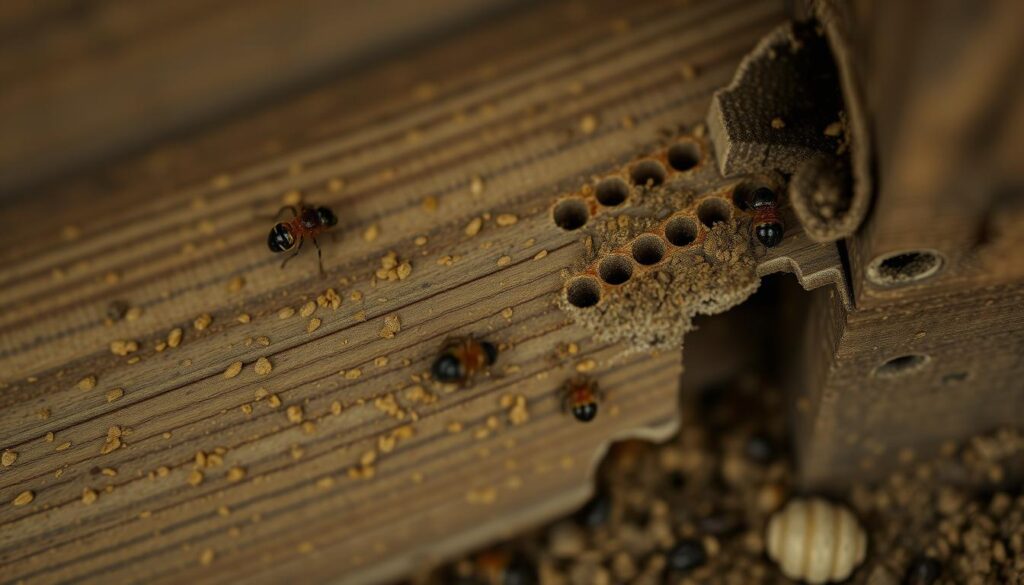
It’s key to spot termite infestation early to prevent damage. Termites can harm your home’s wood without you noticing. Regular checks can help catch these pests early.
Mud tubes are a clear sign of termites. These tunnels help termites move from their underground homes to your wood. You might also see piles of sawdust or wood powder, which are termite droppings.
Look for moist or damaged wood too. Termites love damp areas, making wood look different. Also, watch for walls, floors, or ceilings that seem to be sagging or bulging.
Regularly check your home inside and out for these signs. A pro pest control service can also do a detailed check to find any problems early.
“Early detection of termites is crucial to prevent significant damage to your home. By addressing the problem promptly, you can minimize the impact and protect your investment.”
Termites are hard to stop once they start. So, it’s vital to act fast if you think you have termites. Spotting termite activity early and taking action can save your home.
Termite Inspection and Treatment Options
Dealing with termites requires professional termite inspections and termite treatment methods. Experts start by checking your property for termites. This helps find and fix any termite problems early.
Professional Termite Inspections
Inspectors use special tools to look for termites inside and outside your home. They search for mud tubes, wood damage, and swarming termites. This helps them know how bad the problem is and what to do next.
A termite inspection is key to protecting your home or business. It helps catch termites early, preventing big damage. This way, you can stop termites before they cause too much harm.
Termite Treatment Methods
Depending on the termite infestation, treatments vary. Options include foundation treatments, tent fumigation, non-tent treatments, or heat treatments. The best method depends on your property and the termite problem.
Talking to a trusted termite control service helps find the best solution. They’ll check your situation, suggest treatments, and apply the right termite treatment. This keeps your property safe from termites.
Quick action and the right termite treatment methods protect your property. This avoids the high costs of ignoring termite problems.
Preventing Future Termite Infestations

Termite Prevention Tips for Homeowners
There are ways to stop termites before they damage your home. Homeowners can take steps to keep their property safe from these pests. This helps avoid costly damage to your home’s structure.
- Keep wood piles at least 20 feet away from your home’s foundation.
- Remove any old wooden structures, such as stumps or fences, from around your property.
- Maintain proper ventilation in crawl spaces and address any moisture issues that could attract termites.
- Seal cracks and gaps around windows, doors, and utility pipes to prevent termite entry points.
- Consider using pressure-treated lumber for any new construction or repairs in termite-prone areas.
Regular inspections are key to catching termites early. Working with a professional pest control company can help. They offer a detailed plan to prevent termites, including regular checks and treatments when needed. This way, you can protect your home and avoid expensive damage.
“Termites are an increasing problem in urban areas in Colorado, and early detection through regular inspections is key to protecting your home.”
Remember, termite prevention tips and ways to prevent termite infestations are vital. They help keep your home safe and protect your investment. Stay alert and take the right steps to keep termites away.
Consequences of Neglecting Termite Issues
Ignoring termite problems can cause serious damage to your property and wallet. Uncontrolled termite damage can compromise a building’s structure, risking collapse and safety hazards. This can lead to expensive repairs, sometimes over $10,000.
Termite infestations can also lower your property’s value, scaring off buyers and reducing the selling price. Not dealing with termites can also lead to legal trouble, especially for landlords who must keep their rentals safe and healthy. The consequences of ignoring termite problems and risks of unaddressed termite infestations are serious and wide-reaching.
| Consequence | Impact |
|---|---|
| Structural Damage | Termites can cause extensive damage to the structural integrity of a building, leading to costly repairs and potentially compromising safety. |
| Decreased Property Value | Unresolved termite issues can significantly decrease the market value of a property, making it less attractive to potential buyers. |
| Legal Liabilities | Landlords have a legal obligation to maintain their properties in a habitable condition, and neglecting termite problems can lead to legal issues. |
| Health Risks | Termite infestations can promote mold growth and attract other pests, creating an unsanitary living environment and increasing the risk of illness. |
It’s crucial to tackle termite issues quickly to avoid these consequences of ignoring termite problems and risks of unaddressed termite infestations. Regular checks and early pest control can protect your property and investment.
“Neglecting termite issues can lead to substantial financial burdens, with repair and restoration costs being considerable.”
Conclusion
Termites can seriously harm buildings. They might not directly break health codes, but their damage can lead to violations. Homeowners and landlords must act fast to stop termite damage. They should do regular inspections and use good prevention and control methods.
Regular checks and quick action on termite problems can reduce health risks. Being proactive protects your property and keeps it safe for others. Fixing termite issues quickly keeps buildings strong and meets health rules.
Even though termites aren’t a direct health code issue, ignoring them can cause big problems. Keeping a close eye on pests and fixing termite issues quickly is key. This way, you can keep everyone safe and make sure places are healthy to live or work in.
FAQ: Termites and Health Code Violations
Are termites a health code violation?
Termites are not a direct health code violation. They don’t pose an immediate threat to people’s health. But, the damage they cause to buildings can indirectly break health and safety codes. This is especially true if the damage weakens the structure or affects indoor air quality.
What are the health risks associated with termite infestations?
Termites can seriously damage buildings, weakening walls and floors. This damage can lead to health risks. For example, it can make indoor air quality worse and increase the risk of collapse.
What are the landlord’s responsibilities regarding termite control?
Landlords must keep rental properties safe and habitable. This includes dealing with termite infestations. They should regularly check the property, treat any termite problems quickly, and fix any damage to prevent more harm.
What are the signs of termite activity?
Look out for mud tubes, small piles of sawdust or powder, moist wood, and sagging walls or floors. These are signs of termites.
What are the termite inspection and treatment options?
Getting a detailed termite inspection from experts is key to finding and fixing infestations. The treatment depends on the problem’s size. Options include foundation treatments, tent fumigation, non-tent treatments, and heat treatments.
How can homeowners prevent future termite infestations?
To stop termites, keep wood piles away from your house, remove old wooden structures, and maintain doors and windows. Also, check your property often for termite signs.
Source Links
- https://www.pestboard.ca.gov/forms/termites.pdf
- https://texinspec.com/dont-panic-heres-how-to-handle-a-failed-termite-inspection/
- https://www.terminix-triad.com/our-blog/everything-you-need-know-about-termites-nc
- https://www.actiontermitecontrol.com/are-termites-harmful-to-humans/
- https://luvalawn.com/preventing-termite-infestations-understand-their-behavior/
- https://puschnguyen.com/your-rights-exploring-the-possibility-of-suing-your-landlord-for-termite-infestation/
- https://www.excelpestservices.com/restaurant-health-regulations-pest-control/
- https://www.insectekpest.com/blog/health-code-compliance-pest-control-best-practices-for-restaurants/
- https://www.dialenvironmental.com/blog/who-pays-for-the-termite-inspection-the-buyer-or-the-seller/
- https://affordablehousing.complianceprime.com/articles/landlord-health-code-violations/
- https://rentprep.com/blog/property-maintenance/responsible-pest-control-landlords-tenants/
- https://www.doorloop.com/blog/pest-control-tenant-and-landlord-responsibilities
- https://luvalawn.com/identifying-early-signs-of-subterranean-termites-activity/
- https://www.bugs.com/blog/how-to-spot-the-early-signs-of-a-termite-infestation/
- https://extension.colostate.edu/topic-areas/insects/termites-5-532/
- https://www.forbes.com/home-improvement/pest-control/termite-inspections/
- https://www.fullscopepestcontrol.com/complete-guide-to-termite-inspection/
- https://www.louisvillecashrealestate.com/blog/2024-what-happens-if-your-house-failed-a-termite-inspection/
- https://www.midstateservice.com/blog/2024/october/the-hidden-dangers-of-ignoring-a-termite-infesta/
- https://www.american-apartment-owners-association.org/property-management/bedbugs-roaches-termites-and-other-things-that-bug-you/
- https://www.goodnaturepest.com/blog/vitality-of-safeguarding-your-business-against-pest-infestations
- https://pmc.ncbi.nlm.nih.gov/articles/PMC8781989/