


Seeing signs of wood pests in your home is a big worry. It’s key to know if it’s termites or carpenter ants. Both can harm your home’s structure, but fixing them differently. This guide will teach you to tell these pests apart, what damage they do, and how to keep your home safe.
Key takeaways
- Termites and carpenter ants are common wood-destroying pests that can cause significant structural damage to homes.
- Accurate identification is crucial as the treatment methods for termites and carpenter ants differ.
- Understanding the physical characteristics, behavioral differences, and nesting habits of these pests can help you identify the problem and take appropriate action.
- Early detection and prompt action are essential to prevent further damage and ensure the safety of your home.
- A thorough inspection and damage assessment can help determine the severity of the infestation and guide the most effective control and prevention strategies.
Distinguishing Carpenter Ants from Termites

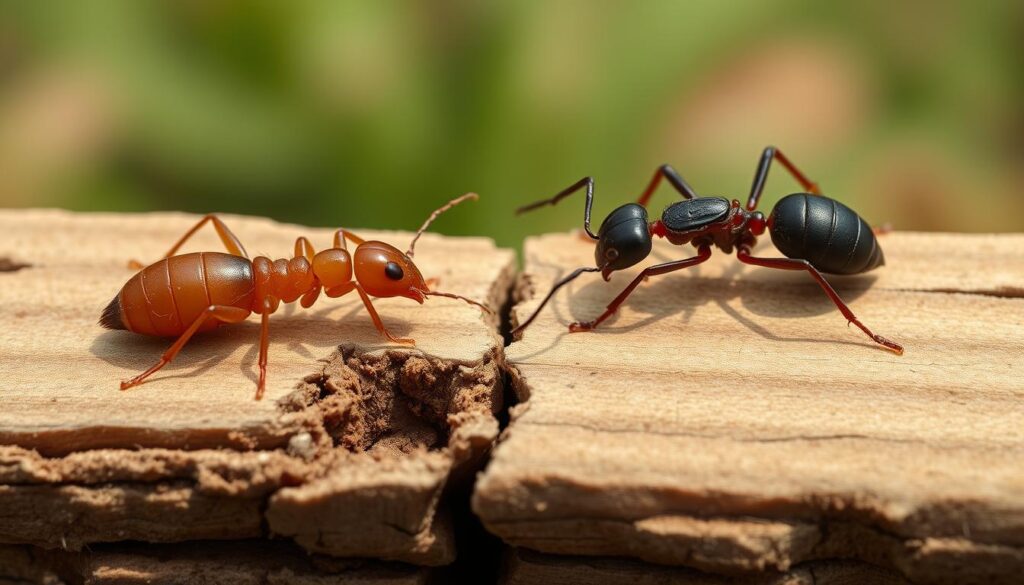
Identifying wood-destroying pests like carpenter ants and termites is key. They might look similar at first, but their physical traits tell them apart.
Physical Characteristics
Carpenter ants have a slender waist that clearly divides their body. Termites have a broad waist, making them look more uniform.
Antennae shape is another clue. Carpenter ants have elbow-shaped antennae, while termites have straight ones. Also, carpenter ant swarmers have larger front wings than hind wings. Termite swarmers have wings of the same size.
| Characteristic | Carpenter Ants | Termites |
|---|---|---|
| Body shape | Slender, pinched waist | Broad, uniform waist |
| Antennae | Elbow-shaped | Straight, bead-like |
| Wings | Front wings much larger than hind wings | Wings of equal size |
By focusing on these details, you can tell carpenter ants from termites. This helps you know how to handle your pest problem.
The Damage They Cause
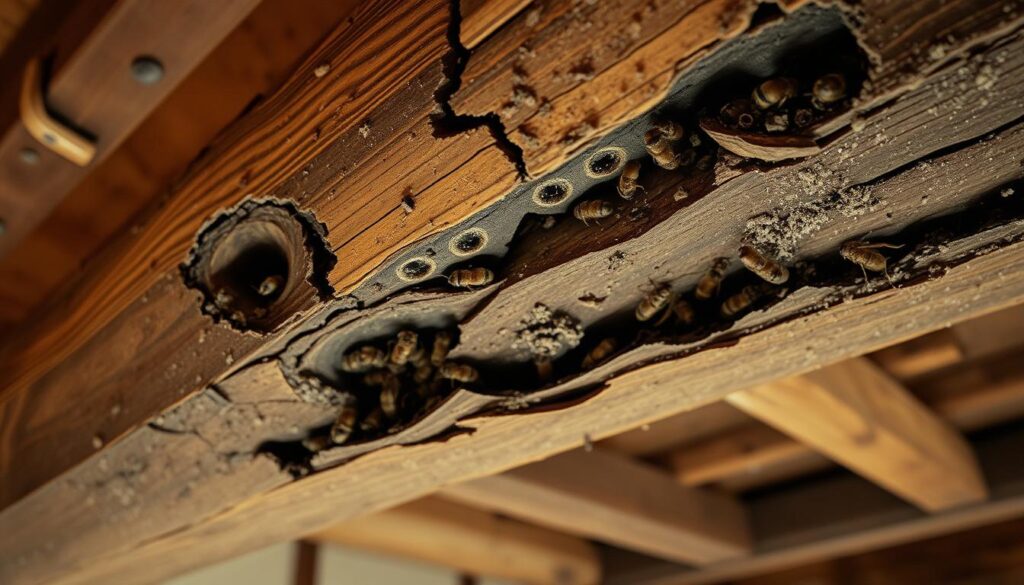
Both termites and carpenter ants can harm your home’s wooden parts. But, they damage it in different ways. Termites eat wood fast, causing big wood damage in 2-4 years. The wood looks bent or crumbling, like water damage.
Carpenter ants, however, don’t eat wood. They dig tunnels and galleries, weakening the structure. They leave behind frass, or excrement, that looks like sawdust. This chewing can also cause carpenter ant damage.
The way these pests damage wood is different. Quick action and professional pest control are key. They help prevent termite damage or carpenter ant damage from getting worse.
Termite or Carpenter Ant – Behavioral Differences
Termites and carpenter ants have different behaviors. Termites stay hidden in their underground homes and mud tunnels. They only show up when it’s time to swarm, looking for mates.
Carpenter ants, however, are often seen looking for food. They like sweets, meats, fruits, and even pet food. They’re usually found in the kitchen or pantry at night. Carpenter ants build nests in the walls of homes, unlike termites.
Termites can damage homes quickly, in just 2-4 years. Carpenter ants, while not as destructive, can still harm a home. Both pests need to be stopped to protect a house.
| Behavior | Termites | Carpenter Ants |
|---|---|---|
| Visibility | Primarily remain within mud tunnels and underground colonies, only visible during swarming season | More likely to be seen foraging for food, such as sweets, meats, and pet food, often spotted in the kitchen or pantry at night |
| Nesting Habits | Build complex underground colonies | Establish satellite nests within the structure of a home |
| Destructiveness | Cause significant structural damage within 2-4 years | Generally less destructive, only excavating tunnels and not continuously eating wood |
Knowing how termites and carpenter ants behave helps homeowners fight these pests. It keeps homes safe and sound.
Nesting Habits
Knowing how carpenter ants and termites nest is key to managing pests. This knowledge helps homeowners and experts tell them apart and act fast.
Carpenter Ant Nests
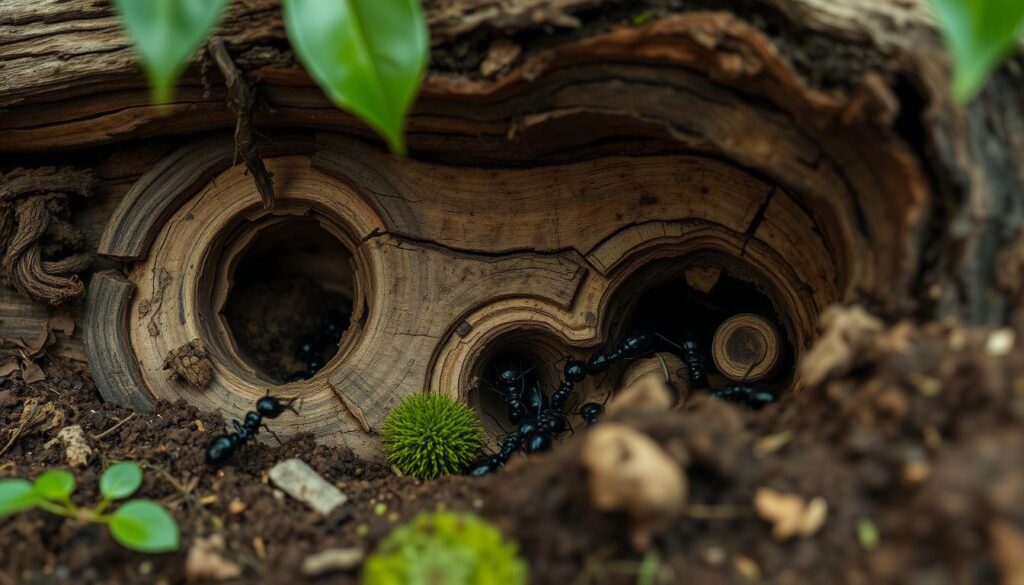
Carpenter ant nests are clean inside, with ants removing debris. They build thin wooden ribs to divide galleries, making their nests organized. These nests are found in moist, rotting wood, like wall voids or under floors.
Termite Nests
Termite nests, on the other hand, are made of mud tunnels. Subterranean termites live underground, while drywood termites nest in wood. Their nests are less tidy, with a complex network of mud tunnels.
| Characteristic | Carpenter Ant Nests | Termite Nests |
|---|---|---|
| Appearance | Clean and polished, with thin wooden ribs | Mud galleries and tunnels |
| Location | Moist, decaying wood (wall voids, under floors, tree stumps) | Underground (subterranean termites) or within wooden structures (drywood termites) |
| Organization | Organized and structured | Chaotic and intricate network of mud-lined tunnels |
By knowing these nesting habits, you can spot and deal with carpenter ant or termite problems. This helps prevent major wood damage to your home.
Conclusion
Knowing whether you have termites or carpenter ants is key to fixing the problem. Termites need professional help, like liquid barriers and bait stations. Carpenter ants can be treated with baits, sprays, and nest treatments.
It’s vital to act fast to keep your home safe. If you think you have termites or carpenter ants, call a pest control expert. They can check your home and suggest the best treatment.
Termites and carpenter ants can damage your home a lot. They can cost you a lot of money if not stopped early. By knowing the difference and acting quickly, you can save your home from damage.
Early detection and quick action are crucial. If you’re worried about termites or carpenter ants, contact a pest control expert. They can help protect your home from these pests.
FAQ: Termites vs Carpenter Ants
What are the key physical differences between carpenter ants and termites?
Carpenter ants have a slender waist and elbow-shaped antennae. Termites have a broad waist and straight, bead-like antennae. Termite swarmers have wings of equal size. Carpenter ant swarmers have front wings that are much larger than the hind wings.
How do the types of damage caused by termites and carpenter ants differ?
Termites damage wood quickly, eating it for food. This can cause a lot of damage in 2-4 years. The wood looks bent, sagging, or crumbling.
Carpenter ants don’t eat wood but dig tunnels and galleries. This weakens the structure over time. They leave behind frass, or excrement, that looks like sawdust.
How do the nesting behaviors of carpenter ants and termites differ?
Termites are hard to spot because they stay in their mud tunnels and underground colonies. Carpenter ants are more likely to be seen foraging for food at night. They can be found in the kitchen or pantry.
Carpenter ant nests are clean and polished inside. The ants remove all debris. Termite nests are made of mud galleries and tunnels, often extending into a home’s structure.
What are the key steps to identifying whether you have a termite or carpenter ant infestation?
It’s important to know whether you have termites or carpenter ants to choose the right treatment. Look for physical characteristics, signs of damage, and behavioral patterns. If you’re unsure, contact a professional pest control expert for a thorough inspection and treatment plan.
Source Links
- https://www.bobvila.com/articles/termite-vs-carpenter-ant-damage/
- https://alluneedpest.com/signs-of-carpenter-ants-vs-termites/
- https://www.callnorthwest.com/2023/07/carpenter-ants-vs-termites-spot-the-difference/
- https://takecaretermite.com/blog/carpenter-ants-vs-termites/
- https://www.greengianthc.com/termites-or-ants/
- https://www.yalepest.com/termite-damage-and-carpenter-ant-damage/
- https://eliminateem.com/blog/termites/carpenter-ants-or-termites/
- https://mandmpestcontrol.com/carpenter-ants-vs-termites-whats-the-difference/
- https://www.thespruce.com/difference-between-ants-and-termites-2656329
- https://www.mightymitetermite.com/blog/termites-vs-carpenter-ants/
- https://pinnaclepest.com/carpenter-ant-frass-vs-termite-frass/
- https://procorpest.com/learning-center/pennsylvania-pest-control/carpenter-ants-vs-termites-understanding-the-impact-on-your-property/
- https://www.excelpestservices.com/carpenter-ants-vs-termites/
- https://www.jamisonpest.com/blogs/carpenter-ants-vs-termites/