


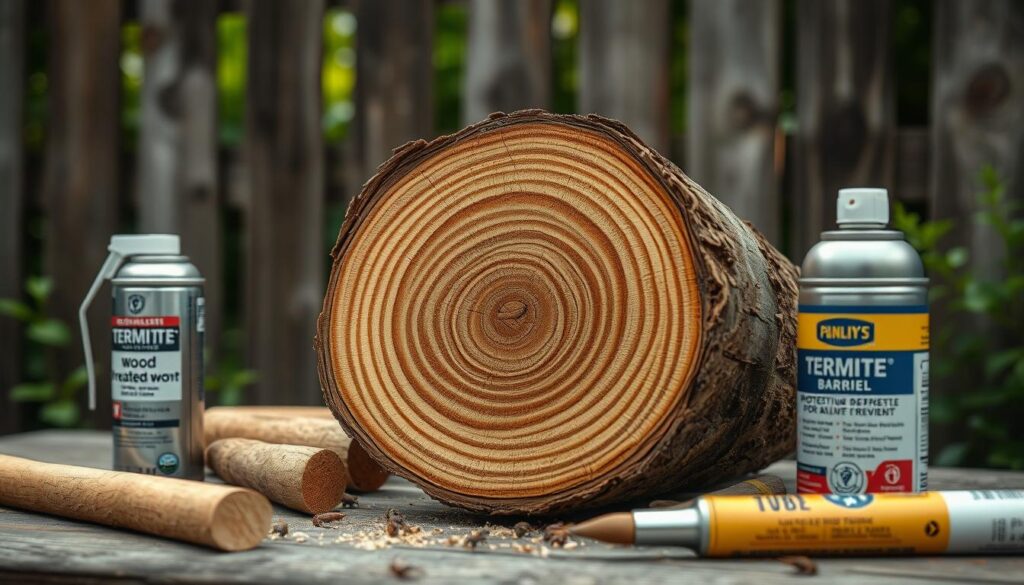
Pressure-treated wood is often used for outdoor projects like decks and fences. The chemicals in it help protect against termites and carpenter ants. But, treated wood is not completely safe from termites. It can still get damaged if termites find the right spot.
Key takeaways
- Pressure-treated wood is considered “termite-resistant” but not “termite-proof”
- Chemicals in pressure-treated wood can leach out over time, leaving the wood vulnerable
- Proper installation and maintenance are crucial to prevent termite infestations
- Termites can still find ways to access untreated wood parts, causing damage
- Regular inspections and proactive termite control measures are recommended
Understanding Pressure-Treated Wood

Pressure-treated wood is a common building material. It’s been treated to fight off decay, pests, and insects like termites. The treatment pushes chemicals deep into the wood’s pores. This makes the wood last longer and resist environmental damage.
What is Pressure-Treated Wood?
Pressure-treated wood is timber that’s been treated to last longer. It fights off termites, fungi, and other wood destroyers. The chemicals used are pushed deep into the wood, creating a shield against harm.
Types of Wood Treatments and Preservatives
Older wood treatments included Chromated Copper Arsenate (CCA), but it’s now banned due to safety issues. Today, safer options like copper azole (CA) and Amine Copper Quat (ACQ) are used instead.
| Wood Preservative | Description |
|---|---|
| Chromated Copper Arsenate (CCA) | Previously used, but restricted due to toxicity concerns. |
| Copper Azole (CA) | A safer alternative to CCA, commonly used today. |
| Amine Copper Quat (ACQ) | Another commonly used, non-toxic wood preservative. |
Pressure-treated wood is great for outdoor projects like decks and fences. It’s also used indoors where it’s needed to fight off decay and pests. But remember, it’s not completely safe from termites.
“Pressure-treated wood is described as ‘insect-resistant’ but not ‘insect-proof,’ according to US construction codes.”
As time goes by, the chemicals in pressure-treated wood can leak out. This makes the wood more vulnerable to termites. It’s key to check on these structures often and take steps to keep them safe.
Will Termites Eat Treated Wood?

Termite Resistance vs. Termite-Proof
Pressure-treated wood is mostly resistant to termites, but it’s not completely safe. Termites might not eat the treated wood right away. However, they can still make mud tubes to get to the untreated wood inside or below.
As the chemicals in the wood wear off, the inside becomes more vulnerable to termites. This is especially true if the wood starts to rot.
Factors Affecting Termite Infestation in Treated Wood
Several things can make treated wood more likely to get termites. These include:
- Wood-soil contact – Termites are drawn to moisture and cellulose in soil. They use this to get to treated wood.
- Moisture – Too much moisture can weaken the wood’s defenses. This makes it more attractive to termites.
- Gaps and cracks – Any openings in treated wood let termites reach the untreated core. This makes it easier for them to infest.
- Wood decay – As treated wood rots, the preservatives can leak out. This leaves the wood open to termite damage.
| Termite-Resistant Wood Types | Termite-Appealing Wood Types |
|---|---|
|
|
Even though pressure-treated wood is termite-resistant, it’s not termite-proof. To keep your home safe, use good building methods, check for pests often, and manage pests well.
Construction Guidelines for Termite-Resistant Structures
To keep your home safe from termites, follow important construction rules. One key rule is to avoid wood-soil contact. Raise wooden parts at least 6 inches off the ground. Also, mount wooden posts on a concrete base to block termites.
When using pressure-treated wood for underground parts, seal it with concrete. This keeps the wood’s protective barrier strong. It stops termites from getting in through cracks or holes.
It’s also vital to keep the treated wood in good shape. Fix any damage quickly to keep the wood’s protection strong. By following these steps, you can make your home more resistant to termites.
Avoiding Wood-Soil Contact
- Elevate wooden members at least 6 inches above the ground
- Mount wooden support posts on a concrete base
- Encapsulate the below-grade portion of pressure-treated wood with concrete
| Termite Prevention Method | Description | Effectiveness |
|---|---|---|
| Soil-applied termiticides | Liquid treatments applied to the soil during construction | Highly effective, but requires over 100 gallons and multiple applications |
| Termite baits | Installed after final grading to prevent damage | Effective in monitoring and controlling termite populations |
| Wood treatment | Application of disodium octoborate-tetrahydrate to deter termite feeding and shelter tube construction | Proven to be a reliable termite-deterring method |
| Stainless steel mesh | Physical barrier that prevents termite intrusion | Accepted in some parts of the United States as a termite-resistant solution |
“Effective termite prevention measures are crucial as subterranean termites are the most damaging and economically important species in the U.S.”
Will Termites Eat Treated Wood
Pressure-treated wood is often seen as resistant to termites. Yet, it’s not completely safe from them. Termites can still get to the untreated wood inside, especially if the wood decays or has gaps.
To keep your home safe, follow construction rules and avoid wood touching soil. Regular checks on the treated wood are also important.
Pressure-treated wood is not termite-proof. Wood less than two inches thick is usually safe above ground. But for below-ground use, treated lumber is best, as building codes often require.
Chemicals like copper azole and sodium borate are used to treat wood. But these can fade over 7 to 10 years, leaving wood vulnerable to termites.
To keep treated wood termite-resistant, replace damaged wood quickly. Termites might make mud tubes to get to the untreated wood. Getting professional termite treatment and regular checks are key to keeping your home safe.
| Treatment Method | Termite Resistance | Durability |
|---|---|---|
| Pressure-Treated Wood | Termite-Resistant | 7-10 Years |
| Borate Treatment | Highly Termite-Resistant | Indefinite |
| Copper Azole | Termite-Resistant | 20+ Years |
| Alkaline Copper Quaternary | Termite-Resistant | 20+ Years |
To protect your home from termites, follow construction rules and avoid wood-soil contact. Keep the treated wood in good shape. Regular inspections and treatments by professionals are also vital.
Remember, while pressure-treated wood offers good termite resistance, it’s not a complete shield. Stay alert, maintain your wood well, and seek expert advice to protect your home from termites.
Conclusion
Pressure-treated wood can help protect against termites, but it’s not foolproof. Homeowners and builders need to be careful. They should know the limits of treated wood and take extra steps to keep their homes safe.
Understanding how termites affect treated wood is key. Following the best practices for building can help a lot. For example, keeping wood away from soil is important.
Even though treated wood is resistant to termites, it’s not completely safe. The wood’s age, condition, and the environment around it can weaken the treatment. Regular checks and upkeep are essential to keep treated wood effective.
To really protect a home, a complete plan is needed. This plan includes using treated wood, building it right, and checking for pests often. Acting early and using many strategies can help avoid termite damage.
FAQ: Termites and treated wood
What is pressure-treated wood?
Pressure-treated wood is wood that has been treated with chemicals. These chemicals are pushed into the wood to protect it from rot and insects. It’s used for things like decking and fence posts because it lasts longer.
What types of wood treatments and preservatives are used?
In the past, wood was treated with Chromated Copper Arsenate (CCA). But now, safer options like copper azole (CA) and Amine Copper Quat (ACQ) are used.
Is pressure-treated wood termite-proof?
No, it’s not termite-proof. It’s more like termite-resistant. If it gets wet and starts to rot, termites can attack it. Also, new cuts or holes can attract termites.
What factors can affect the termite resistance of treated wood?
Several things can make treated wood more vulnerable to termites. These include being in contact with soil, being wet, and having gaps. Over time, the wood’s protective chemicals can wear off, making it easier for termites to get in.
How can I maximize the termite resistance of pressure-treated wood?
To keep treated wood termite-resistant, follow some important rules. Make sure the wood isn’t touching the ground. Keep it at least 6 inches up. Also, use concrete bases for wooden posts. And, keep the wood’s surface intact to prevent termites from getting in.
Source Links
- https://www.colonialpest.com/2014/06/25/will-termites-infest-pressure-treated-wood/
- https://www.linkedin.com/pulse/termites-eat-pressure-treated-wood-stephen-omondi
- https://www.toropest.com/can-termites-eat-pressure-treated-wood/
- https://insight-pest.com/blog/is-pressure-treated-wood-termite-resistant/
- https://www.varsitytermiteandpestcontrol.com/blog/do-termites-eat-all-kinds-of-wood
- https://www.mightymitetermite.com/blog/choosing-wood-carefully-to-prevent-termite-infestation/
- https://www.holderspestsolutions.com/blog/what-do-termites-like/
- https://preservedwood.org/portals/0/documents/WW_termites.pdf
- https://content.ces.ncsu.edu/termite-prevention-approaches-for-new-construction
- https://www.chemfreeexterminating.com/can-termites-infest-pressure-treated-wood/
- https://thelocalguyspestcontrol.com.au/blog/do-termites-eat-treated-pine/
- https://www.vulcantermite.com/education-and-prevention/bugs-love-bugs-can-pets-2/
- https://entomology.ca.uky.edu/ef605
- https://www.termitespecialist.sg/what-type-of-wood-do-termites-eat/